
Saturday, February 16, 2013


Thursday, January 31, 2013
Problems & Solutions
"Insanity and poetry are old kin" writes Daniel Pritchard in his piece on Everyone Has a Mouth in Critical Flame. Coincidentally I just finished Anthony Storr's Feet of Clay. In the book's introduction, Storr writes:
Both revelation and delusion are attempts at the solution of problems. Artists and scientists realize that no solution is ever final, but that each new creative step points the way to the next artistic or scientific problem. In contrast those who embrace religious revelations and delusional systems tend to see them as unshakeable and permanent.It's not clear to me if Ernst Herbeck's condition extended from his verbal flights to an encompassing system. But even if the artful verbal patterning associated with schizonphrenia is simply the verbal "scratching" of a mental "itch", it remains a way to handle and temper what Storr calls "the chaos within."
Wednesday, January 30, 2013
Graham Foust's The Next Big Thing!
Who's the Next Big Thing? Graham Foust's the Next Big Thing! Watch for his Anacreon in Heaven & Other Poems coming this spring from the formidable Flood. And while you wait, check out three of his books and a translation that will stun you and wake you up both. Here's Graham's NBT:
What is the working title of your book (or
story)?
To Anacreon in Heaven and Other Poems.
Where did the idea for the book come from?
From living in Edna St.
Vincent Millay’s barn for a month, which is just to say that that’s where I
started writing it. I tend not to begin
books with ideas, as the vast majority of my ideas are terrible.
What genre does your book fall under?
“The poem begins and
ends in silence. Why not call it
nothing?” (Allen Grossman)
What actors would you choose to play your characters
in a movie rendition?
Any resemblance of my
characters to actors—living or dead—is purely coincidental.
What is the one-sentence synopsis of your book?
“There’s not even room
enough to be anywhere.” (from Bob
Dylan’s “Not Dark Yet”)
Will your book be self-published or represented
by an agency?
Flood Editions—bless
them—will publish the book this spring.
How long did it take you to write the first draft
of your manuscript?
I started writing it in
July of 2009. I can’t remember when I
actually sent the draft to Flood. Maybe
fall of 2011?
What other books would you compare this story to
within your genre?
Saying it compares to
nothing else would be arrogant, as would saying it compares to any of my
favorite books. I feel comfortable
saying that I think a lot of the book’s spirit comes from William Gaddis’s Agapē Agape, which is neither in my genre nor anything like
my book. But I went to Gaddis’s book a
lot while I was writing mine, and I think it helped me. I’d also say that roughly 66% of the poetry I
read while I was writing the book was written by Emily Dickinson. But that may be just as true of my other
books.
What else about your book might pique the
reader’s interest?
The book makes no use of
enjambment and some of the poems are quite long. I used to be a “short-line, short-poem guy,”
so this is a chance for people who really like that sort of thing to accuse me
of changing for the worse and a chance for people who really don’t like that
sort of thing to give me another chance.
Also, the book’s cover is a piece by John Stezaker, and he’s a genius.
My tagged writers:
Thomas Pynchon
Claire Becker
Saturday, January 26, 2013
The next Next Big Thing . . .

What is your working title of your book (or
story)?
Visitor
Where did the idea for the book come from?
Lingering
over Anthony McCann’s Moongarden, I came across the reference to a poem by Jaime Saenz called “Homenaje a la
epilepsia.” I’d heard of Saenz because of the translations by Forest Gander and
Kent Johnson collected in a book called Immanent Visitor, but I hadn’t actually read it. My son has epilepsy so I am always hunting down ways to better understand what it means to
understand the condition from inside the experience. Google gave me the poems
in Spanish, but for some reason (bad googling) I couldn’t find easy access to a
translation into English. I decided to translate them myself with my poor-to-non-existent Spanish
and my sense of the lived experience of epilepsy. The resulting poems took on a
life of their own and continued to evolve as I worked
on them. Eventually I did read the Gander and Johnson translations and discovered
that their book includes selections translated from “Homenaje a la epilepsia,” but by then it was too late. My own “translations” had veered off in their own direction and were propagating like mad.
What genre does your book fall under?
Poetry.
Which actors would you choose to play your
characters in a movie rendition?
Since every
voice and figure, every “you” and “I” in this book is both me and not-me, clinician and patient, it’s
better to let the reader allow each voice and figure, each “you” and “I” be
their own self and not-. In other words, Stellan Skarsgård.
What is the one-sentence synopsis of your
book?
“There’s a
boy who stands where the door should be.” –from “The Door that Leads In and In
but Never Out,” a poem in the manuscript
Will your book be self-published or
represented by an agency?
Agents are
not relevant for books of poems. I am definitely a fan of self-publishing for
any author who has the spirit and energy to promote their book full time. Dickinson,
Whitman and Blake are heralds of the future as much for how they controlled
their poems’ entrance into the world as for the poems themselves. For myself, I
treasure the collaboration that comes with publishing through an existing
publisher and feel that my first two books, Live
Feed and The Pitch, were vastly improved by publishing with
Alice James Books. So I’m aiming to go the pre-existing publisher route again with a player to be named
later.
How long did it take you to write the first
draft of your manuscript?
Six weeks . .
. from late July to early September. They came fast.
What other books would you compare this
story to within your genre?
As different
as my book is from Jaime Saenz’s (and as much as I think my own poems suffer in
comparison), any excuse to read his poems is a great one. I was reading
a lot of Czeslaw Milosz while I was writing these poems as well. His
hand-to-hand moral struggles with the material world and spiritual longing continue
to surprise me. He's never top of mind if someone asks me for a favorite poet, but I can’t think
of a poet I’ve read so frequently and with such continuing profit over the twenty
years I’ve been reading him. While writing these poems, I was also reading a lot of Rimbaud’s Illuminations and from his selected letters, which is an altogether different animal than Milosz. In a way, Anthony
McCann is most responsible for the manuscript because he led me to the trigger.
But more than that, the perspective of a McCann poem—longing-and-lostness-at-a-slight-remove, passion infused with distance—inspires
these poems as well. The poems take a Rimbauldian call to “be drunk with
life” and let the experience progress into something akin to an actual drunken state—a
little out of control, a wee bit numb, wanting closeness and not sure how to
get it, straddling the uncertain horses of body and mind.
What else about your book might pique the
reader’s interest?
The final section ends up in a humid, fecund garden in my adopted
hometown of Coxsackie, New York—a kind of oxygen machine that afforded me the time, space and lung capacity to
write these poems. How can you not be interested in a book that lands you in a town named Coxsackie?
Thursday, July 26, 2012
Allegory Is an Endless Loop

Another experiment with the process that led to my "It's My Decision" piece. This one with a new, under-construction poem, "Allegory Is an Endless Loop."
Thursday, July 12, 2012
Summer Pop
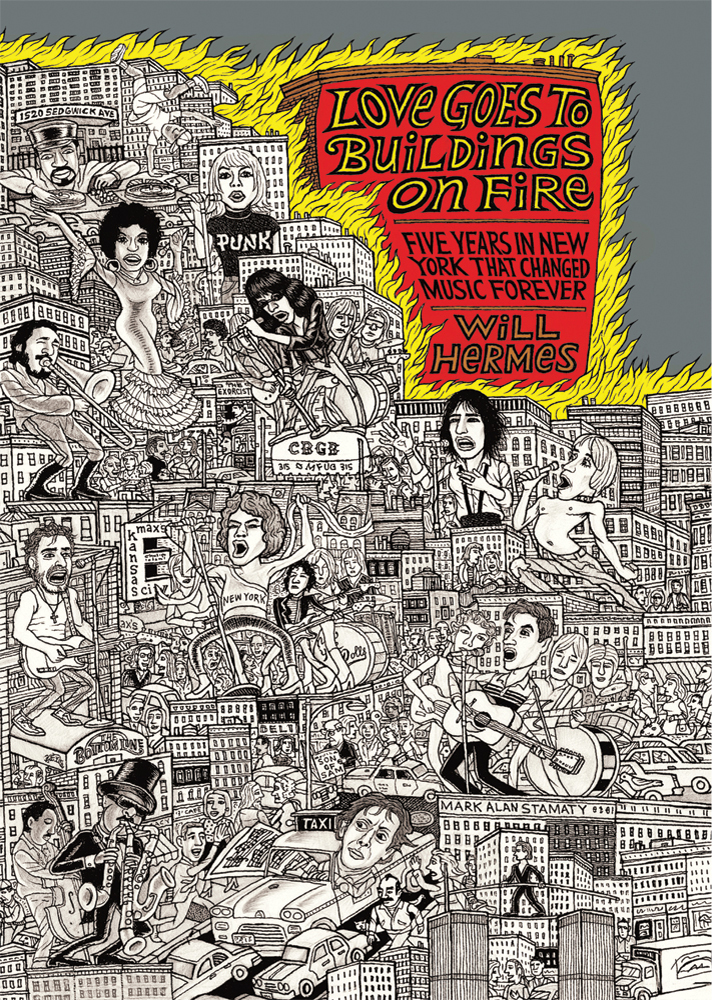
But now, suddenly, I hear how new this song is still. The robotic repetition thrills me and plays a brain-chord that inspires a kind of pre-seizure ecstasy. I don't have epilepsy (as far as I know) but know that those who do have the kind of brains that are prone to mechanically repeat a phrase over and over. If I don't do that myself, it's only from having a kind of filter that tells me NOT to do it (the kind of filter, presumably, a brain prone to epileptic seizures does not have). When this repetition occurs artfully it scratches a deep-brain itch of mine and feels spectacular.
Growing up confined in the seemingly impermeable confines of a well-groomed town, I could only hear Donna Summer as saccharine (otherwise, how would her music have gotten through on the radio?). Now, I hear the artist in her, listening to all the music happening—the radical, the roots, the rhythm and the pop—absorbing and transforming it and passing it on.
It's a moment of listening that was akin to how I felt watching Andrew Garfield play Spiderman. The gig was a pop blockbuster, but as an actor you could feel him working with it. Giving the role everything he'd learned as an actor. It wasn't realism, it was acting, the art of the role. While I love the authentic voice, I learn more from the kind of artificiality that allows me to notice the performance, the thinking and the lived life and the playing. The gig is the gig. What are you going to do with it?
Wednesday, July 4, 2012
The Watertowers of New York

Check it out here.
Subscribe to:
Posts (Atom)